Don't show this again

SRP ONLINE & SRP MOBILE INTERMITTENTLY UNAVAILABLE
Starting Saturday, November 21, 2026 at 11:00pm through Sunday, November 22, 2026 at 7:00am, SRP Online and SRP Mobile will be intermittently unavailable due to scheduled maintenance. We appreciate your patience and apologize for any inconvenience.

HOLIDAY HOURS
All SRP branches will be closed Thursday, November 26, 2026 in observance of Thanksgiving Day.

 
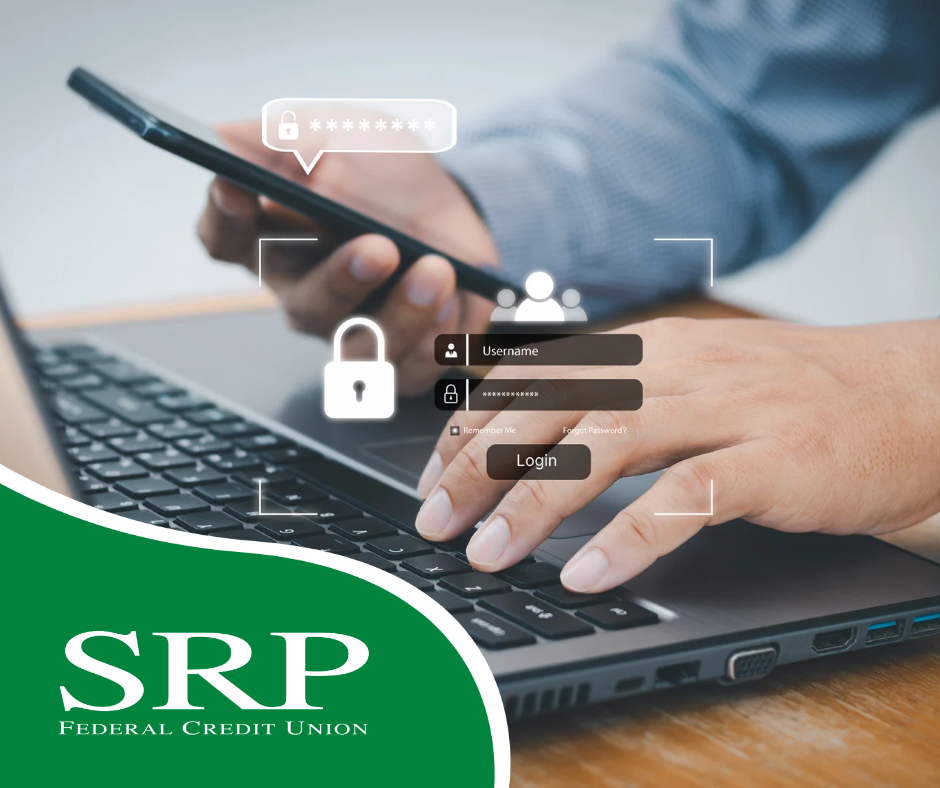
A man protects his identity with two-factor authentication.

Protecting Your Identity and Information


posted on

To win a physical fight, you need to develop your skillset by having a strategy, building up strength, and identifying your weaknesses. The same applies when protecting your identity, but it doesn’t have to be overwhelming. This month, take 30 minutes each week to focus on practical steps to prevent identity theft and safeguard your personal information. 

Week 1: Check Your Credit Reports and Consider Freezing Your Credit 

You can pull your credit report from each bureau for free on AnnualCreditReport.com. Carefully review each one for any unfamiliar accounts or suspicious activity. You may also want to consider freezing your credit with all three bureaus. It’s free and prevents anyone from opening accounts in your name without your permission. You can unfreeze it when you’re ready to apply for credit again. 


Takeaway: Pulling your credit reports and freezing your credit are free and easy steps to protect yourself from Identity theft. 


Next Week: We live online, so next week, we will check the locks on all our accounts and ensure we’re not easy targets for hackers. 

Week 2: Update Passwords and Enable Two-Factor Authentication (2FA) 

This week, take time to update your most important online account passwords (banking, email, and shopping). We know it’s a pain, and that password you’ve used across the web since college is such an easy go-to, but now more than ever, it’s important to be vigilant. Work smarter, not harder, by using a password manager to generate and store strong, unique passwords securely. 


Enabling two-factor authentication (2FA) on any account that offers it will add an extra layer of security. 


Takeaway: While it’s a pain to change your trusty, easy-to-remember passwords and add the extra account verification step, these preventative steps will save you the time and hassle that comes with being hacked. 


Next Week: We’ll review your accounts and make sure you’re using all available security resources. 

Week 3: Set Up Fraud Alerts and Maximize Account Security Features 

Check each account and sign up for fraud alerts through your bank, credit card companies, or credit bureaus. Fraud alerts notify you if suspicious activity occurs on your accounts, allowing you to mitigate fraud damage by catching and addressing it early. 


If you have extra time, Investigate each account’s available security features, such as account monitoring, identity theft protection services, or credit monitoring tools. Many are included at no extra cost, especially for financial accounts. 


Takeaway: Taking a few minutes to review available security features and ensure you’re making the most of them will offer future protection with little effort. 


Next Week: We’ll focus on ways to secure your personal information online and offline. 

Week 4: Review your digital footprint 

It’s time to clean up your online presence and shore up your digital footprint. Check your social media pages for personal details and remove any information scammers could use. For example, posting your mother’s maiden name or sharing a picture of your first car could easily reveal common account recovery questions. A few other tips for a safer digital walk include: 

  • Ensure that you use secure websites when shopping online (look for “https” in the URL). 
  • Avoid logging into sensitive accounts while on public Wi-Fi. 
  • Using a VPN. 

Takeaway: It’s important to practice good digital hygiene. It’s easy to be careless online, but it’s just as easy to incorporate habits that protect against fraud. 


By taking just 30 minutes each week to protect your identity and ensure your personal information stays secure, you’re one step ahead of identity thieves! 


Have questions? SRP offers free financial coaching where you can meet with one of our Financial Counselors to help you navigate your finances. 


This article is for informational purposes only and is not intended to provide tax, legal, or accounting advice. You should consult your own tax, legal, and accounting advisors for advice. Membership required. SRP is federally insured by NCUA. 


Article Credit: BALANCE 

 
A woman talks on the phone while looking with concern at her credit card.

Identity theft: A survivor's guide


posted on

Identity theft is a crime with many faces: from the thief who your skims your card info at the ATM, to the hacker who assumes your persona and opens accounts in your name.

Unfortunately, rectifying identity theft damage can be like untangling a wet knot. You can do it – but it’ll require patience and perseverance. 


To start, commit yourself to becoming and remaining organized. Since you’ll probably be communicating with a lot of people, you’ll want to keep track of who said what, and when. Keep copies of all letters and emails and maintain a verbal correspondence log. File everything right away and store everything in a safe and accessible place. 

Step one: Creditors and financial institutions 

If accounts have been used or opened illegally, contact your creditors immediately. Ask for fraudulent transaction documentation as you may need it to file a police report. Add passwords that are difficult to guess to replacement cards and all existing accounts. 


If a collection agency attempts to collect on a fraudulent account, explain in writing that you’re a victim of identity theft and not responsible for the debt. Ask that they confirm in writing that you do not owe the balance and that the account has been closed. 


For checking account fraud, contact your financial institution to place stop payments on any outstanding checks you didn’t write or other transactions. It’s also a wise idea to cancel your checking and savings accounts and obtain new account numbers and passwords. Monitor all future account statements carefully for evidence of new fraud. 

Step two: Legal and government agencies 

Report the crime and file a report with either your local police or sheriff’s department or the law enforcement organization where the identity theft took place. Request a copy of the report and keep the phone number of your investigator handy. 


Create an Identity Theft Report with the Federal Trade Commission (FTC), which is the combination of the Identity Theft Affidavit from the FTC and the police report. 


Notify your local postal inspector if someone else has used your address. If your Social Security number has been fraudulently used, alert the Social Security Administration. 

Step three: Credit reporting bureaus 

The most arduous task in this process may be ensuring your credit report lists only factual information. To know what is being reported, you’ll need to obtain a credit report from each of the three major credit bureaus. If you’re married, your spouse should also check their report. 


Even if the fraudulent information hasn’t yet appeared on your credit reports, be proactive and report the crime now. Contact one of the bureau’s fraud department and request that an extended fraud alert be entered on your file for seven years instead of the normal 90-180 days. Confirm that the bureau you filed the fraud alert with will contact the other two bureaus for you and have them place fraud alerts as well. 


Write a victim’s report – a brief statement describing the details of the crime – and send it to the bureaus to be added to your credit report. The first credit reports with the fraud alert are free and will be sent to you automatically. After that, check your credit report every three months to ensure accuracy.


Healing the wounds of identity theft will take time and work. However, the sooner and more aggressively you deal with the problem, the faster you’ll see results.


Have questions? SRP offers free financial coaching where you can meet with one of our Financial Counselors to help you navigate your finances. 


This article is for informational purposes only and is not intended to provide tax, legal, or accounting advice. You should consult your own tax, legal, and accounting advisors for advice. Membership required. SRP is federally insured by NCUA. 


Article Credit: BALANCE 

A man holds a cell phone and a credit card with a tablet on the table.

How to protect yourself from credit card fraud

posted on

In the modern world, almost everyone holds a credit card. A recent study revealed that 84% of American adults have at least one credit card and that are 572 million open accounts in the US. 


The reach and popularity of credit cards have made it a major target of scammers. Many fraud schemes target credit cards, such as skimming (copying the credit card details electronically and duplicating the card), card theft, identity theft, phishing, vishing (voice phishing), card not present fraud, etc. 


Here is how you can protect yourself from these credit card scams. 

Types of credit card fraud 

Unfortunately, there are multiple credit card frauds you need to be aware of. The most straightforward of them all is the card theft. When you order a new card upon the expiry of your existing one, someone may steal the new card from your mailbox. Similarly, if you lose your card, an unscrupulous person may get his hands on it and may take advantage of your credit. 


Card ID theft happens when the fraudster comes to know the details of your card and tries to use those details to make charges with it. 


Phishing is a scheme in which the scammer steals credit card details. It’s an online tactic in which the perpetrator, posing as a legitimate entity, solicits your credit card number, expiry date, and CVV number. 


Vishing (voice phishing) is similar, but here someone pretending to be from the bank or the credit card company calls you to get more information about your card. 


Card not present (CNP) fraud happens when the perpetrator uses your CVV number to pretend they are in possession of your card. Merchants use the CVV number to verify that you are in possession of your card when you make purchases online or over the phone. This verification is not required for in-store purchases. 


If the fraudster somehow obtains your credit card number and expiration date, they can try to find the three-digit CVV number by trying various number combinations. They may try 1,000 different combinations before they succeed. 


Credit card skimming is a fraud scheme in which an illegally modified point of sale (POS) machine is used to capture your card details. The details are then used to create a duplicate card that can be used to make charges to your account. A fraudster who wants to withdraw money using your card may even install a spy camera in an ATM to capture your PIN. 


Protecting yourself from fraud schemes 

Try not to let these schemes get you too stressed. If you’re careful, you can greatly reduce the potential damage to your credit. Here are a few precautions you can take to protect yourself from wannabe thieves. 

  1. Never share your credit card details

Actual employees from banks or credit card companies will never call you and ask you for the credit card number, expiration date, or CVV number as part of any verification process. Never divulge this information to anyone online or offline. 


Always ensure you type in your bank URL on the address bar of your browser, rather than clicking a link in an email. Phishing perpetrators usually set up a website that looks similar to your bank’s website to fool you into handing over your credit card details. 


Also be sure to look at the address bar and ensure the browser verifies the site’s security certificate. It may say “secure” or there may be a padlock symbol. Don’t enter your credit card details at any site whose security isn’t verified. 

  1. Keep checking your account

Instead of waiting for your monthly statement to scan for anomalies, keep checking your credit card account online at least once a week to ensure there are no unusual transactions. Small charges also shouldn’t escape your scrutiny. Small charges on your account may well be an indicator that someone is trying to test your CVV number. Be vigilant and ensure you inform your financial institution about any unusual charges you find. 

  1. Never let your card out of your sight

When giving your card for payment, ensure that it remains visible the entire time. Additionally, don’t give your PIN to anyone. Instead, insist on typing the PIN yourself on the POS machine. It may be difficult to check whether the POS device used by the merchant is genuine or has been modified to skim your card. If something doesn’t feel right, take your card back. 

  1. Check your credit report

You’re entitled to a free credit report every year from Equifax, Experian, and TransUnion through AnnualCreditReport.com. You can use this to check if your identity has been used by someone else to make transactions. 


The credit report will give you detailed evidence of any fraudulent activities in your name. If you see some fishy activity, initiate a fraud alert with your credit bureau so that financial institutions or creditors are informed every time a credit request comes up in your name. You can initiate the fraud alert with only one of the above the above listed credit bureaus; the other two will receive automatic notifications. 

  1. Check where you swipe your card

There are many skimming methods to steal your card information. Sometimes it involves attaching a skimming device inconspicuously to the ATM. Gas stations, department stores, and other retail locations also may have compromised POS machines with a skimmer placed on them. 


Usually, the skimmer on a POS machine can be detected if you look carefully for any ill-fitting parts. To get an idea of what to look for, check out YouTube videos on identifying a skimmer at a POS. 


You might think it pays to be paranoid in today’s world. When it comes to credit cards, the main issue is their prevalence. Almost everyone has one, but only a fraction understands the technologies involved and the vulnerabilities present. However, if you’re careful with credit card and information, and make a commitment to continue to keep up with the latest scams, you can give yourself greater peace of mind. 


Have questions? SRP offers free financial coaching where you can meet with one of our Financial Counselors to help you navigate your finances. 


This article is for informational purposes only and is not intended to provide tax, legal, or accounting advice. You should consult your own tax, legal, and accounting advisors for advice. Membership required. SRP is federally insured by NCUA. 


Article Credit: BALANCE